Showing posts with label poetry. Show all posts

Sunday, May 16, 2010

Welcome to Nowhere

Welcome to Dahmash. Please have a seat.

People will say that my blog is all about gloomy Palestinian slums (my previous post was about Silwan). let them say so. There are certain things about gloomy Palestinian slums that make them interesting:

1. They are right in our backyard, though we almost never go there (My walk through Silwan was my first time visiting the neighborhood, and I was born in Jerusalem.)

2. We are very much responsible for how gloomy they are.

3. They are an endangered species worth seeing now, before Israel manages to demolish them entirely.

Take the "village" of Dahmash, in a fact a neighborhood of the city of Ramla, fifteen minutes southeast Tel-Aviv. It's not even "Palestinian" per-se, since its residents are citizens of Israel. Then again, they are Arabs, and therefore have somewhat limited rights. Let us observe: what rights do I have as a Jewish Israeli that the people of Dahmash don't?

1. My town appears on the maps. The state agrees that it exists. Dahmash does not officially exist, despite having been there since before the founding of the State of Israel.

2. I get my mail delivered.

3. my garbage gets collected. (points 2 and 3 are only fully true now, once I moved to Tel-Aviv from an Arab neighborhood in Jaffa.

4. I don't have to acquire electricity by improvised wire from my neighbor.

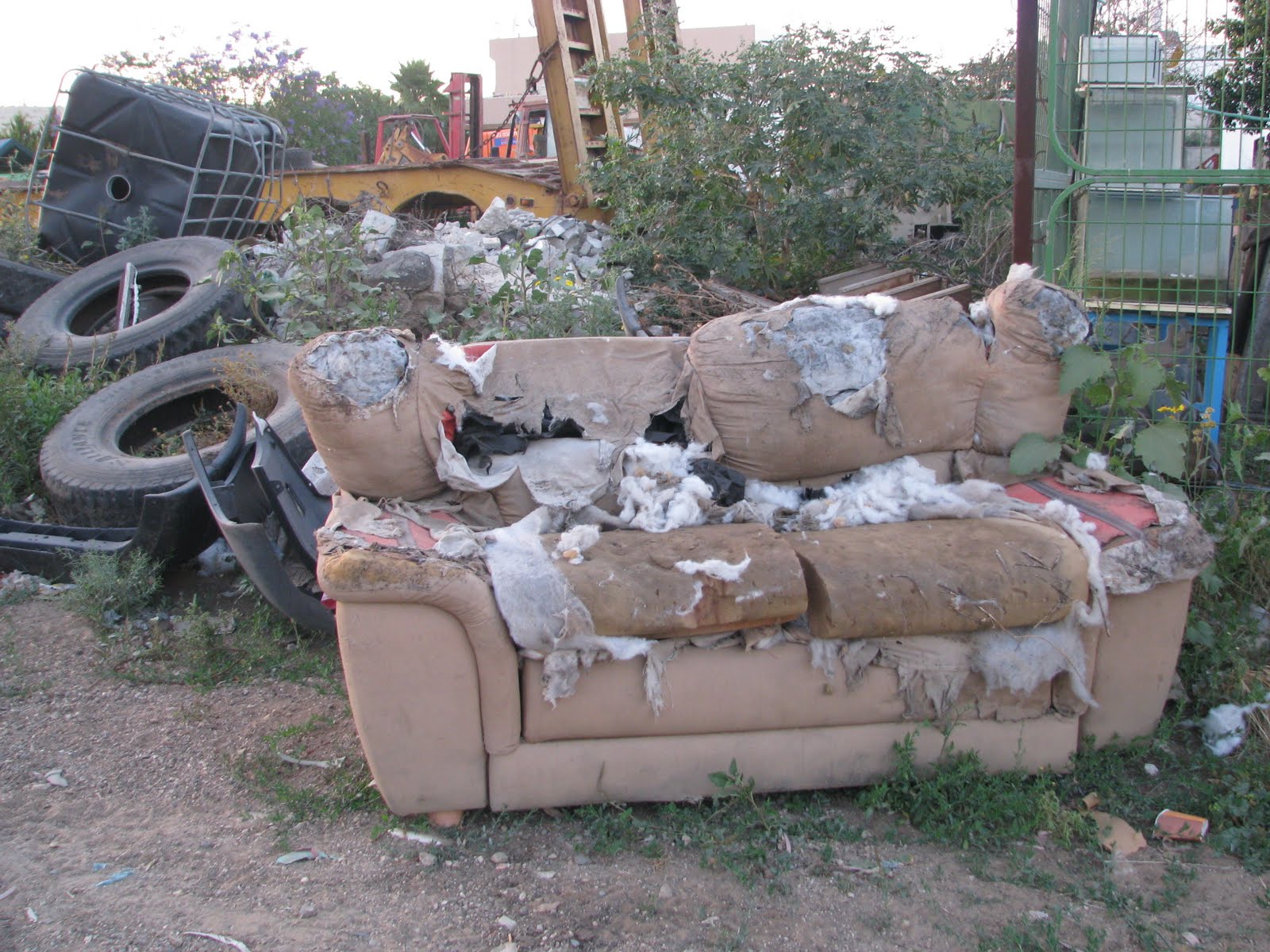
5. I don't have a huge auto-dump-site placed right next to my house, polluting the land and air for the children of the neighborhood. Needless to say, Dahmash was there before the dump's location was chosen, but again, it was there physically, not officially.

7. No walls are built around my community, protecting other communities from the "thieving nature" of me and my neighbors.

6. I can walk down the street directly to my house. Currently the people of Dahmash can as well: A gravel road winds by the dump site and leads them to the main road, but the municipal authorities surrounding the village are planning to block the road and force the 600 residents to make their way through the orange groves.

8. The police do not come daily to inspect my deeds.

9. No one is threatening to demolish my home.

Currently 13 Dahmash houses are set to be demolished for "illegal construction". Something is of course to be said for town planning and building ordinances, but not when those are dictated by racism. Dahmash's people can't possibly get a building permit, while residents of the surrounding Jewish-Israeli communities, the "Moshavim", can build freely. Those Moshavim are younger than the village and were founded with the blessing of the state.

A few years ago five homes in Dahmash were demolished. The people of the village tell of the Israeli demolition team and how they emptied the houses of the families' belongings. "They found the children's schoolbooks and threw them out with the trash." Tells Arafat, "The children ran over to them, confused, in tears."

which brings me to the final right I have which the people of Dahmash are denied:

10. I am being treated as a human being.

The final hearing over the demolition is to take place tomorrow. The people of the village have no real hope.

On Thursday we came there as activists of "Culture Guerrilla". We listened to their stories.

and then held a poetry event in Hebrew and Arabic.


The Culture Guerilla strategy is to later use the poems and the documentation of the event to try and stir media buzz around the issue. These activities bore fruit in the past, especially in matters of labor disputes. Most recently, a judge quoted one of the poems while ruling in favor of the Eckerstein factory laborers, who sought to organize.

However, when it comes to the right of Arabs we don't expect much of an effect. The state of Israel is full of "unrecognized villages" most of them Bedouin communities, some of considerable size. Under the Zionist ethos, there's no chance for them to change status.

The best we can do is be good neighbors and try and give a good show. The people of the village were extremely hospitable to us. they made us feel completely at home at their home, which is hardly a home and may soon no longer be there at all.

Monday, April 12, 2010

Cliff Notes

1. Off Moher
Four quid a bed in no town
House and mist, not quite a world
Square sliced, elderly coupled was the evening
and what and what.

I used to wake up in such beds from nightmare home
Outside mist, inside no house
a pint of tea
There's a war here too they say
Money flows in Limerick's Shannon,
all protection, rots the boats,
It's green and burns slowly
like everything.

And what? I own no camera,
nor the dark road shaped like long me
or no town's late burger.
I own the unenveloped steel.

Oh, and yes,
the lust for heaths.


2. Saaremaa
Near here, I found a Soviet camp.
across camp fence, near here, a corridor,
in a corridor (dark), stepped on something.

Camera flash all I have.

Camera shows, in an instant, bunch of twigs
Sauna down the corridor. In an instant I'll see.
Soviet troop fled, left tub.

Near her, all I think, near her. Now are they?


3. Failed Nocturne
If we abide by lighthouse strategies, I won't get a lift to town.
won't get a lift to town
no lift to town
Promise me you'll leave a fiver at the pub.
By the order of the stone fence, so I vow.

And on the very night which is not night
too blue for night
too blue
Next to the German runaway I sit,
Camper wheels and wine, hopes for the aurora, and hey!

The fiver, Never left it. Done the vanishing act again.
vanishing act again,
vanished again.
Top of Scotland top of of tops
The grass and the cork. Everything's light. No fence in sight.

(photos were taken around Tagaranna cliffs, Saaremaa, Estonia.)

Sunday, April 11, 2010

The 6,000,001st Victim

A friend wrote me today, outraged. She is a non-Jew from a former Soviet country and is spending time here on an internship. Apparently, an American friend of hers visited her over the week before leaving the country. That American is a scholar of the Yiddish language.

When the American reached Ben-Gurion airport, the security staff detected Yiddish books in his luggage. That provoked their suspicion. A young, non ultra-orthodox man reading Yiddish? They took him to a back room for interrogation. When they found out he was staying with the former Soviet girl, they pieced the different clues together and deduced that she was a fancy hooker, somehow catering to clients who have a Yiddish fetish.

The American was kept under interrogation for a while, insisting that his hostess is not a prostitute and that he's not involved in the flesh-trade. Finally, the security agents faced him with a conclusive question: "Do your Yiddish books contain stories that portray Ultra-Orthodox Jews as involved in Human trafficking?"

I can't swear by this story because I wasn't there, but this is how it was told by my friend, and it's not all that implausible. Ben-Gurion security personnel are as known for their strange questions as much as they are for ethnic profiling.

Moreover, Yiddish does threaten us as Israelis. It's written in the Hebrew alphabet, yet we can't read it. It's been so firmly confined to either the aged or the Hassidic, that we suspect anyone else who takes interest in it. Yiddish was of course banned by early Zionists, who sought to create a new Jewish identity. In the Fifties, protesters used to stand outside the Yiddish theatre in Tel-Aviv and throw stones at the actors and audience as they left the show.

To this day, the attitude remains the same. My Belorussian friend Vola told me that Israel's embassy in Minsk refused to host the launch of the first Yiddish -Belorussian dictionary. Their explanation: Yiddish is not Israeli.

Tonight marks the eve of our Holocaust memorial day. I'd like to take this oppurtunity and mourn one of the more unique victims of that horror: the native language of my grandparents. The Nazis murdered millions of speakers of this beautiful tongue, itself a dialect of German. Had they and their offspring been alive today, Yiddish might have lived, and with it all the poetry, humor and wisdom of East Europe's Jewry.

As it is, we're left with a precious few who are dedicated to keeping it alive, among them are certain gringo potential pimp types and a few Israeli loonies, like Tel-Aviv's own Assaf Galai. Non-Jewish Russian animation artist (and possibly prostitute) Elizaveta Skvortsova produced this amazing clip for Itzik Manger's lullaby "By the roadside stands a tree". She gave us another gift we are unable to give ourselves.

In the song, The mother sings to her child of a tree that was abandoned by birds in wintertime. The child, compassionate, wishes to turn into a bird and sing for the tree. His mother sows him warm cloths, lest he is inflicted with Tuberculosis on those bare branches. Burdened by the weight of wool, the child can't take wing. "You love me so much mother," he sings, "that I can't become a bird."

I dedicate this song today in memory of those massacred and of their enormous cultural legacy, which we fail to respect.

Thursday, April 8, 2010

Over the House, Large Hanging Fans

On the table is a cat. On the cat is a newspaper. In the newspaper are two poems by Agi Mishol.

I came down to the hamlet of Kfar Mordechai to interview Mishol, One of Israel's best known poets. The interview itself belongs to my own newspaper and is to be published next week. But if I can't speak of Mishol, I'll at least speak of her home.

By now Mishol has lived in Kfar Mordechai, about 30 kilometers south of Tel-Aviv, for 37 years. Many of her poems touch on these surroundings. Her new book opens with a loving words directed at it. "This field is my prayer mat" she writes of the green expanse seen outside the window, and in another verse:

I wish I could shake words out of me
The way I shake pecan trees
till the nuts hit
the ground
So that the poem leads me
home.

I decided to explore that field, that tree, that home. The house itself is drenched in flowers, like everything in Kfar Mordechai.

I took the long way back to the highway, wandering through the fields, the pomegranate and persimmon groves, the vinyards. Magical? yes, and yet this is Israel, which Mishol knows well. "Pastorale" a poem out of the same book, opens thus:

Over the house, large hanging fans –
combat helicopters from the army base.

Underneath, the scent of rice has already faded
from the Thai workers' trailer.
The sorting machine grumbles in the shed.

Because of his wool hat it’s hard to know
whether he’s Tawa-chai or Nee-pon,
“Kahane was right” printed on the t-shirt
someone gave him.

At this time of year blossoms and fruit share the tree.

The streams, in this case Gamliel creek, just north of the house, are overflowing.

Nature and mankind cooperate in seemingly perfect harmony.

So close to all of this is our imperfect reality. Israeli urbanism, for example, is eating up the fields at an atrocious rate. No less than three massive towns can be reached on foot from Kfar Mordechai (seen here are the outskirts of Rehovoth, to the north). The military base mentioned in the poem, the Tel-Nof air field, is no more than four kilometers away from the Mishols' house. It was from here that planes took off to bomb Gaza during the onslaught.

So is this place good? is it bad? Is it a cosy home? Is it a slaughterhouse? Maybe we should simply learn from our poets and look in both directions.

(portion from "Pastorale" was translated by Lisa Katz)

Sunday, March 14, 2010

Cultura e Basta

Tel-Aviv on a friday can be somewhat bizzare.

It's got its messiahs and those who make offerings of straberries, buns and pineapples to them.

It's got its enthusiastic chanters

and its occasional march of the queen's guards.

It's even got its alternative literaty stalls, run by a mixed staff of humans and cartoon animals.

This is Itka's "Bastarbut" stall, featuring the land's finest offerings in underground comics, poetry and progressive thought. It's about time I wrote something about this project, which was the gateway to many of my adventures over the past few years.

When I met Itka, she had a folding table at the back of her car and a couple of crates full of books and journals. Her idea was to take alternative Israeli literature, most of which is created around Tel-Aviv, and take it to peripherial towns.

Israel's smaller cities suffer from a dreadful lack of cultural activity. A city like Tiberius, for example, has neither a theatre ensamble nor any kind of musical ensabmle to call its own. The concept of young, ass kicking culture is unheard of there. Having said that, the north is rich with music festival and other events. If the comics and poetry get driven there by Itka's little Renault, they go the distance.

Since then Bastarbut (a name bombined of "basta" - market stall, and "tarbut" - culture) became an online store and a sort of an active organization producing spoken word events and supporting other cultural endeavors. This Friday, though, it still looked like the old idealistic traveling one woman show, the peddler's cart next to which we slept in the dirt in the Negev. It's a magnet of good people, too. We got a visit of honor from prime Lithuanian blogger Daiva Repeckaite.

and ended up jamming behind the books with prime Israeli hard rocker and master bratwurst maker Zeev Tene, actress Yael Appelbaum and the legendary Helene.

If all of this looks like an advertisement to my girlfriend's business, you should know that it is not a business. Bastarbut doesn't pay off fiscally. The sales often don't cover the price of fuel to the destination, not to mention the trip back. It's one of those things that happen in this world because they must do, because goodness is there to be shared, even when it's melancholic goodness, as in Yanay Perry's heartbreaking comic book, or dirty goodness as in Merhav Yeshurun's poetry, or painful political goodness as in such journals as "Sedek". This is Hebrew culture's most profound goodness. It's well worth lugging around.

Monday, February 8, 2010

The Soul has no Body but the Body has a Soul

Could a poem bearing the Valentine's-Day-appropriate title "You are my Girlfriend" be scandalous? Yes, if it's written in Hebrew. In the ancient tongue of Moses, all second-person references are gender specific. "You are my Girlfriend", by late Israeli poet Yona Wallach, is written for a man.

It also features the Hebrew equivelants of such words as "pussy" and "prick". When the ministry of education caught word that a teacher in sleepy suburban Kfar Saba was teaching it to 12th graders, they reprimanded her strongly. Her students were shocked that their favorite teacher, the one who actually got them to love literature, was under fire. They quickly formed a guerilla cell and launched a media attack.

The story got exposed in "Haaretz" and made powerful enough waves that Gideon Sa'ar, The Minister of education, felt obliged to comment. He came to the teacher's defence, while maintaining that the poem should not be taught. "There are limits", he said.

This in turn stirred further wrath among Wallach's fans. Today's Haaretz editorial sharply criticizes the minister. I find that while the poem really can't be mistaken for anything by Beatrix Potter and may not be the poet's finest (a translation is provided) I side with the paper.

I too was taught texts by Wallach (pronounced Vollach) in high school, and they are why I believe in Hebrew poetry. They taught me that poetry is a living creature, that it is the most dangerous, fantastic form of art there is. Yes, Wallach's poetry is lewed, it's as lewed as the language these kid's speak, which is why they would find it credible, which is why they would believe other poets, which is why they will end up writing poetry themselves.

Wallach's fearless use of language and blurring of gender lines are part of what makes her great (a peek into my previous post will clarify my position on woman who challange gender cliches), but it's only a part of it. She's great because she is profound. If the ministry of Education can't deal with profound poetry, than literature shouldn't be taught here at all. Minister Sa'ar recently initiated a program featuring visits by military officers to schools. I think we should forget about teaching the kids how to read, and just have do with teaching them how to kill. That's not considered so controversial around these parts.

You are my Girlfriend / Yona Wallach

You are my girlfriend
You've got the head of a girl
And you are a girl girl
Like that sweet kid
Said to me in appreciation
You are a guy girl
Or otherwise a girl guy
Because to begin with
Women are undervalued
But your crooked head
Makes you live with a girl
Maybe she's really a guy girl
But you don't talk about it
You live an established life
"Comme il faut"
Similar to all other lives
But entirly empty
Open only outwards
Without content that isn't there
Isn't there
Because your essences are different
And they are silent and paralized
And censored
She may not know
And may not ever know
That she's a lesbian who prefers guys
And you are a gay man who prefers girls
And you are a girl
She's a guy
It kind of works together
It's the mind that matters after all
Not the bodily form
Imagined testicles
Concealing a desiring pussy
Or a pussy
Concealing testicles
A bit of of beauty, of vain charm
Brings about preciseness, the balancing of deviance
Which awakens regardless
With the excessive honesty
Drawing a line down from the mouth
Lack of humor, trecherous charm
In a language as if that of simple teaching
That fails to consider the existance of lie of trechery
With all its complex charmingness lightness cunningness
That must be fought that is essintial
A funny little empty demon
But me I have exact feeling
I hear your fucking voice
Smokey scorched cynical
And I know by the angle of the harm you inflict on me
The voice of the gay man
Tat caught me on accident and is exploiting her to the end
In order to trick me lurking for me waiting for me to give all
Really really whatamistake I thought of you as a guy
I called him you
Girl, you take advantage of the oppurtunity rising over my momentary ignorance
And you crucify me instantly
Forgetting yourself and the main problem of your life
Perhaps recalling them via my forgetfullness above me rests a face
That awaits unconscious sensativity of me so as to look
without thinking that I can learn something of this in replay
to set you a more cleaver trap next time
and forgetting that you, girl, are like everybody else
You wish to advance stay alive
To draw a contineous line of experience
Uncut
It's feminine wickedness I'm suddenly recruiting to the aid of my understanding
And grabbing the prize dear me something here can be precieved
Really a typical feminine structure feminine wickedness
And to always be you
My girlfriend sweet one with testicles
And the body of a guy
The first girlfriend I've had who taught me how a girl's head works
To be acquainted with what is central in life
To the personality forming from one moment to the next to your own lack of awareness
To not knowing who you are in you
With sexual essence its center but as character not sex
Something that can be seperated and heard in a clear voice
That can't be played if unknown
As if we are not
There is no pussy between the legs, no prick there
A spirit wothout a body is moving about the house
Which explains beliefs in the eternal nature of the soul its independance from body and consciousness
The soul has no body but the body has a soul
Facial expressions deny the existance of body
All the time the soul and God speak to us and that is very good
Otherwise we'd forget that we exist and are alive
Otherwise all would be lost without the seperation by a third party
In this case the adoption of an impossible but sufficiantly suspicious identity.

Friday, March 13, 2009

Fat Morning

This poem by Jacques Prévert is originally entitled "La Grasse Matinée", which is an idiom for staying late in bed. I played a bit with a translation found online, but if you really want to get a gist of what this piece can be, you have to find the theatrical recording by Marianne Oswald. "Café crème," she grinds, with the piano being silly in the background, "café crème, café crème, café crime!! arrosé sang."

You know what, I've just located it for you. It's here. Do yourselves a favor and listen to it as you read.

It is dreadful,
the small noise made by the hard boiled egg being cracked against a zinc counter
It is dreadful that noise
when it resounds in the memory of the hungry man
The head of the man is also dreadful to behold
The head of the man who is hungry
when he stares at himself at six o'clock in the morning
in the window of the big store
A head the colour of dust
Yet it is not his head that he is looking at
in the window of Potin's
He does not care about his head, the man
He does not think about it
he dreams
he imagines another head
A calf's head for instance, in vinegar sauce
or the head of anything that's edible
and he moves his jaws gently
and he grinds his teeth gently
because the world is mocking him
and he can do nothing against that world
He counts on his fingers: one, two, three
it's been three days since he last ate
and even though he repeats to himself "three days
it cannot go on"
it does go on
three days
three nights
without food
and behind those windows
those pâtés, those bottles, those preserves
dead fish protected by tins
tins protected by windows
windows protected by the policemen
policemen protected by fear
What a lot of barricades for six miserable sardines
A little further - the bistro
cream coffee and hot croissants
The man staggers
and within his head
a fog of words
a fog of words
sardines to eat
hard boiled egg cream coffee
coffee drenched with rhum
cream coffee
cream coffee
crime coffee, drenched with blood!
A man, well-respected in the neighbourhood,
has had his throat slit in broad daylight
The homeless murderer has stolen from him
two francs,
which make one coffee with a top up
zero francs seventy five
two slices of bread and butter
and twenty five centimes tip for the waiter.
It is dreadful,
the small sound made by the hard boiled egg being cracked against a zinc counter
It is dreadful that noise
when it stirs in the memory of the hungry man.

Friday, February 13, 2009

I'd Even Like You If You Were the Bride of Frankenstein


This weekend provides a peculiar "double date". Today is Friday the 13th. Tomorrow is Valentine's Day. In honor of this coincidence, I opened today's post with a selection of eerie photos from past trips: to Sri Lanka, Belgium and Estonia. Am I the only one who finds them somewhat ghoullish?

Anyway, what really matters as always is love, so the real big day is tomorrow. My valentine to you all is a souvenir from another trip, an even older one. When staying in London during the late 90s, I stumbled upon a collection of young English poetry from the 70s. In it was this gem by John Fuller.

I will post it in its entirety, it doesn't make sense to be stingy on Valentine's day. Please read it aloud, preferably to a belle or a beau. It's not really a love poem, since it contains hardly any discussion of the lover's unique attributes ("I like the way your elbows work, on hinges" doesn't quite crack it). It's just what it sets out to be: a valentine, and a cute one too.

Valentine

The things about you I appreciate may seem indelicate:
I’d like to find you in the shower
And chase the soap for half an hour.
I’d like to have you in my power and see your eyes dilate.
I’d like to have your back to scour
And other parts to lubricate.
Sometimes I feel it is my fate
To chase you screaming up a tower or make you cower
By asking you to differentiate Nietzsche from Schopenhauer.
I’d like to successfully guess your weight and win you at a fete.
I’d like to offer you a flower.

I like the hair upon your shoulders,
Falling like water over boulders.
I like the shoulders, too: they are essential.
Your collar-bones have great potential
(I’d like all your particulars in folders marked Confidential).

I like your cheeks, I like your nose,
I like the way your lips disclose
The neat arrangement of your teeth
(Half above and half beneath) in rows.

I like your eyes, I like their fringes.
The way they focus on me gives me twinges.
Your upper arms drive me berserk.
I like the way your elbows work, on hinges.

I like your wrists, I like your glands,
I like the fingers on your hands.
I’d like to teach them how to count,
And certain things we might exchange,
Something familiar for something strange.
I’d like to give you just the right amount and get some change.

I like it when you tilt your cheek up.
I like the way you nod and hold a teacup. I like your legs when you unwind
them.
Even in trousers I don’t mind them.
I like each softly-moulded kneecap.
I like the little crease behind them.
I’d always know, without a recap, where to find them.

I like the sculpture of your ears.
I like the way your profile disappears
Whenever you decide to turn and face me.
I’d like to cross two hemispheres and have you chase me.
I’d like to smuggle you across frontiers
Or sail with you at night into Tangiers.
I’d like you to embrace me.

I’d like to see you ironing your skirt and cancelling other dates.
I’d like to button up your shirt.
I like the way your chest inflates.
I’d like to soothe you when you’re hurt
Or frightened senseless by invertebrates.

I’d like you even if you were malign
And had a yen for sudden homicide.
I’d let you put insecticide into my wine.
I’d even like you if you were the Bride of Frankenstein
Or something ghoulish out of Mamoulian’s Jekyll and Hyde.
I’d even like you as my Julian of Norwich or Cathleen ni Houlihan
How melodramatic
If you were something muttering in attics
Like Mrs Rochester or a student of boolean mathematics.

You are the end of self-abuse.
You are the eternal feminine.
I’d like to find a good excuse
To call on you and find you in.
I’d like to put my hand beneath your chin. And see you grin.
I’d like to taste your Charlotte Russe,
I’d like to feel my lips upon your skin,
I’d like to make you reproduce.

I’d like you in my confidence.
I’d like to be your second look.
I’d like to let you try the French Defence and mate you with my rook.
I’d like to be your preference and hence
I’d like to be around when you unhook.
I’d like to be your only audience,
The final name in your appointment book, your future tense.

Monday, February 2, 2009

Ithaka

Poem by Alexandria born, Greek poet Constantine P. Cavafy.
Translator unknown.

۞

As you set out for Ithaka
hope your road is a long one,
full of adventure, full of discovery.
Laistrygonians, Cyclops,
angry Poseidon-don't be afraid of them:
you'll never find the things like that on your way
as long as you keep thoughts raised high,
as long as a rare excitement
stirs your spirit and your body.
Laistrygonians, Cyclops,
wild Poseidon-you won't encounter them
unless you bring them along inside your soul,
unless your soul sets them up in front of you.

Hope your road is a long one.
May there be many summer mornings when,
with what pleasure, what joy,
you enter harbors you're seeing for the first time;
may you stop at Phoenician trading stations
to buy fine things,
mother of pearl and coral, amber and ebony.
sensual perfume of every kind-
as many sensual perfumes as you can;
and may you visit many Egyptian cities
to learn and go on learning from their scholars.

Keep Ithaka always in your mind.
Arriving there is what you're destined for.
But don't hurry the journey at all.
Better if it lasts for years,
so you're old by the time you reach the island,
wealthy with all you've gained on the way,
not expecting Ithaka to make you rich.

Ithaka gave you the marvelous journey.
Without her you wouldn't have set out.
She has nothing left to give you now.

And if you find her poor, Ithaka won't have fooled you.
Wise as you will have become, so full of experience,
you'll have understood by then what these Ithakas mean.

Sunday, January 18, 2009

1.2.3.4.5

1. It's not really a ceasefire when you declare it unilaterally.

2. Clarity - a desert helps, as do bright planet Venus over the ravine, a good translation of Eeva Kilpi, and old actress Hanna Maron (who acted for Fritz Lang as a child!) strutting out Hanoch Levine's dark satire on stage, her voice both firm and trembling, both funny and frightening - an intense reminder of the war.

3. It's not really a ceasefire when you sketch it out with your own allies and shake hands on it only with them, after killing over 1300 people, including over 400 children. It's more like an attempt at a sandwich break, or rather a quick lunch with Obama. We are not getting that either

4. Eran Hadas is a genius and several of my other friends are too. I first encountered the new poetry scene in Sde Boker 3 years ago, I was a journalist with Haaretz, the correspondent on pets and gardening. I got special permission to replace the literary correspondent for two weeks "but only in case of emergency", which meant that I could only write about literature if someone died. For two weeks I prayed for the demise of Israel's finest authors and poets. When only some Slovenian author ended up kicking the bucket, I declared to my editor that some random poetry festival in the south was an emergency and headed there. The people I met there are today members of my closest community. Hanging out with the rascals, who shunned the formal panels, who "blitzed" the dining room of the boarding school, bringing slightly insane poetry and music to the unexpecting teenagers, proved wise. From a three year perspective I see the special fire of the new generation growing higher. The use of humor and rhythm intensified, the political subtexts became more focused. I am proud to be a part of what is happening in Hebrew poetry today, I'm proud that we're sexy, I'm proud that we're creative, I'm proud that we take a tough stand.

5. It's not really a ceasefire. Don't read the media, read poetry. That's where it's at. I'll conclude with a bit of Hanoch Levine, provided here for everyone's clarity.

When we take a walk, we are three,
You, me and the next war.
When we go to sleep, we are three,
You, me and the next war.

When we smile at a moment of love
The next war smiles with us.
When we wait at the maternity ward,
The next war waits with us.

When they knock on the door, we are three,
You, me and the next war.
and when all this is over, we still are three,
You, the next war and the photograph.

Monday, January 12, 2009

Desert Sexual Tension Days

It doesn't seem right to write about anything but the war while people are still dying, but since a Palestinian friend of mine just posted something about wanting to take piano lessons, I take the cue from him and declare a humanitarian ceasefire.

It's hardly a ceasefire, because a new war is on its way. The Annual "Desert Poetry Days" festival is coming this weekend, promising drama. This festival, taking place in secluded Sde Boker, on the rim of a lovely canyon, is always a battleground. The poets start off by fighting about poetry. The various generations and cliques clash, if not on stage, then around the past-midnight whisky bottle.

Then there's social tension within and between the groups. in a small creative community such as Israel's, forced friendships last for too long and are good fodder for misplaced frustrations. Ego cluster bombs explode: someone suddenly vanishes to protest having been dissed, someone else calls someone else's poetry "bullshit" to a third person who snitches. An hommage for a dead poet ends with participants being blamed for pretending to be her friends only now that she died and the blamed blaming the blamers for blaming.

Then there's the romantic baggage.

Unlike the Metula Poetry festival, Israel's snobbier, northern verse-fest, Desert Poetry Days shuns snobbism. In Metula, the young, avant garde croud is invited only selectively. In Sde Boker all are welcome to take part in a poetry cabaret. Dorm rooms with capacity of 6 beds are provided for poetry's troublemakers. At least one of them will house no less than nine young spirits for the duration of the weekend. The couple combinations are bound to change mid festival, if not mid-night. Parties at the adjacent kibbutz have been known to fuel the fire, the chill of the wintery desert nights gives it a further kick. Forget poetry, this is a sexy time of year.

Two of my relationships of the passing year began at that festival. Both broke up and in each case one of the parties was hurt badly. now we'll all be there together again. Let me chart out the disaster for you:

-A met me before going to the festival.
-B met A at the festival last year,
-C and E met me at the festival last year.
-D met C and E at the festival last year, hit on E and had a small thing with C.
-B dated C for a few months.
-E and me had a short affair.
-C broke up with B and dated me.
-B hooked up with A. C left me and is now dating F (D's nemesis).
-I am now avoiding C and F.
-G and me developed an interest in each other, but it didn't work out.
-G now avoids me, but will be at the festival,
-as will A,B,C,D and E (F may come too).
-E tells me she's uncomfortable about staying in the same room with D and H
-(D had a thing with J, an ex of both B and previously unmentioned K,
-while H seriously hit on L, A's former good friend, whom she now avoids).
-E prefers to stay with me, M, and N, one of whom once desired C,
-But that bed is already reserved for G, who now avoids me.

Besides, this would just be too mad. I tell E that she should sort it out for herself because things are way damn complicated as they are, and if I could avoid going to the desert I would, but I'm being paid to coordinate a panel and MC an evening with Amos Oz. Wish me luck, brothers and sisters. Hebrew poet Alterman warned his daughter: "Preserve yourself from what is near / like gravel and like sky". In a terrain of much gravel and much sky, I'll do my best.

Sunday, January 4, 2009

Love in the Time of Cholera

Saturday afternoon was spent pleasently with family.

All the cute kids were there, including the one and only Meitar, my niece.

Such a peaceful afternoon.

Such crimson sunset.


Such bad news: Israeli troops have invaded the Gaza strip.


I left my parents' home and joined the Tel-Aviv protest, we were at least 8000 people, about 20% of us were Palestinian-Israelis. We marched and chanted while pro-war protesters swore at us.


A week ago there were 30 of us.

I met lovely people there, from young Renana, who would be adopted by any resistance movement as a poster child,

to ever kind, ever-fiesty Ari and Shelly,

I found my way out past the hostile groups, aided by the police, and went to Osnat's evening in Florentine. It was obvious that the new situation would affect the event, one put together with enormous love and without any wish for reward. Poet Aaron Shabtai came and then left, saying he can't perform at such a time. His daughter Nano remained to kick off the most truely Avant-Garde cultural evening tel-Aviv has ever seen. Accompanied by Billie Levi on Guitar, she created Israel's first spoken word moment.

Merhav Yeshoron worked with an entire jazz outfit.

Chicky teamed with DJ Schoolmaster. His poetry touched openly on the war and the bizzare, painful place in which we live and create, as did Itka's.


She wasn't the only one clapping. This day ended well for us, just as it began well. We will take that goodness and try to radiate it out, to make as much of a difference as possible.

Friday, January 2, 2009

Dhammapada, Chapter XV

"O let's live in joy, in love among those who hate, among people who hate, let's live in love."

Tomorrow, Saturday night, at 18:30, a mass demonstration will be held in Tel-Aviv against the war in Gaza. The gathering will take place where Sderot Chen meet Rabin Sq. Afterwards, the muses will sing. Osnat Skoblinsky, who offers Israel's best underground literature, comix, kicking literary periodicals and music off of her traveling stand "Bastarbut", is hosting Israel's first spoken word event. It will feature the land's finest poets (certainly those with the most unique reading skills), each paired with a musician, ranging in style from rock to electronica. This will happen at the "Comfort" club in Florentine, at 21:00.

"O let's live in joy, in health among the ailing. Among people who are ailing let's live in health."

I composed the following for a new anthology of anti-war literature. The anthology ended up not featuring any prose so this was left out. It is the monologue of a father whose son is being hospitalized during an air raid. He is waiting in the corridor of the crowded, messy hospital's basement, trying to remain calm, then discovering to his horror that one of the walls is adorned with gory 16th century masterpiece "Triumph of Death". by Pieter Bruegel the elder.

אני מנסה לחשוב על ציורים אחרים, מה היה תלוי לאורך קירות הפרוזדור כשגילגלו את האלונקה אל הדלת? איך אני יכול לזכור? מה פתאום שאראה? רק אותו ראיתי ואת התחבושת שהאחות עוד היתה צריכה להחזיק שלא תישמט, כי הדביקו אותה בכזה חיפזון.
עכשיו הוא בפנים אבל גם אצלי בתוך האוזניים, אני שומע אותו מייבב מבעד לפורמאיקה של הדלת הנעולה. ממסד רפואי זה בטחון. אני חייב לבטוח שבכל רגע שעובר זה משתפר, אבל איך לבטוח באנשים שתולים דברים כאלה בפרוזדורים של בתי חולים? אני לא אידיוט. אני מורה בתיכון. אני יודע מה זה. זה “נצחון המוות" של ברויכל. וגם אם בחיים לא הייתי שומע על ברויכל, מי תולה תמונה של שלדים במקום כזה? מה זה? מדבר מלא גופות, אוניות עמוסות בשלדים, שלדים רוכבים על סוסים, אוספים גופות ברשתות דייגים, די! אני לא יכול להביט. אבל הספסל היחיד שמצאו לו מקום בין המיטות שממלאות את המסדרון פונה כלפי הזוועה ואני הרוס, חייב לשבת, והציור גדול כל כך, מטר על מטר וחצי לפחות. מה היה תלוי לאורך הפרוזדור שהוביל לכאן? ואזות, ואזות עם פרחים, צבעי מים, משהו נורמלי, אני בטוח.
מלמעלה, מרחוק כרגע, בא רעם של עוד הפגזה ומבפנים, מעבר לפורמאיקה, בכי של כאב נורא. ילד שלי! מתוק שלי! אל תדאג. תכף אסדר שיכניסו אותי. שלוש אחיות יושבות על הרצפה, שעונות כנגד הקיר שעליו תלוי הציור. הן ישנות בישיבה, כל כך עייפות, פקעת צוורים וראשים שמוטים, אבל זה הצוות הרפואי היחיד בטווח ראיה ואני מנער את כתפה של זאת שקרובה אלי: אולי מותר לי להכנס סוף סוף? הוא בוכה. אני שומע אותו, הוא צריך אותי איתו, כבר המון זמן. כמה זמן אנחנו כאן?
הרופא ייצא ויתן הוראה, היא ממלמלת. יש יותר מדי בלגן, הם פינו את שתי הקומות שמעל האדמה ליתר בטחון ומילאו את זאת בפצועים. עוד אלונקה נגררת עכשיו בקושי בין המיטות ומתחת לתקרה הנמוכה. “לזוז!" צועק הבחור שבחזית, לא ברור האם הוא רופא או קרוב משפחה. הוא לבוש בסוודר מוכתם בדם, אבל כבר כמה ימים אין זמן לכבס חלוקים. הסדינים שעל האלונקה מוכתמים גם כן, אולי בדם פצועים אחרים, מי שעליה שואג בכאב וזו השאגה הראשונה שאני מבחין בה שאינה של בני, אבל היא גוררת אחריה סערה של צופרים אנושיים המשתוללים בצחנת הפרוזדור. מסתבר שכל החדר מילל בכאב מאז שאני כאן ופשוט לא שמעתי. איך החושים משחקים בנו כשאנחנו מותשים ומודאגים, הנה אפילו דמיינתי שעל הקיר תלוי - אבל הוא באמת שם, הציור הנורא של הבלגי המסריח ההוא. האחיות החצי ישנות מקפלות רגליים כדי לאפשר מעבר והאלונקה חולפת מתחת ללפידים הבוערים, להמונים בתכריכים, לכלב המלחך פני אדם.
האיש בסוודר שולח יד ופותח בדיוק את דלת החדר שבו הוא שוכב. לא! החדר הזה שלו! אני מזנק אל האלונקה לעצור אותה, אבל מישהו תופס אותי ומרחיק אותי בכוח ובדיוק אז האורות שוב כבים. במזל אני נשמט על הספסל החשוף ולא על המרצפות או על אחד הפצועים אבל נוגח קצת במוט המתכת של מסגרת המיטה שליד ופתאום גם אני זועק. להתעשת. האורות חוזרים ושוב רק הבכי שלו ושוב נצחון המוות.
זהו. אני מוכרח להסיר את זה, מוכרח. מוכרח לקרוע את זה. ניגש אל הקיר, תופש את המסגרת, מניף אותה ומשליך אותה כנגד הדלת ששוב ננעלה, השטח היחיד שאף נפש חבולה לא מרוחה כנגדו. מאחורי הציור אין קיר, פעור שם חור ששוליו ריריים וחיים כמו שפתי אדם. אלפי עיניים תלויות בקורים זעירים התלויים מתוכו. השפתיים מתרחבות והזעקה שבוקעת מתוכן גוברת על כל זעקות הפרוזדור, על בכי בני ועל זעקתי שלי. כוח כהה בא ומפלח את מצחי. התקרה קורסת, השמים מצאו אותנו.

"O let's live in joy, free from greed among the greedy, among people who are greedy, let's live free from greed."

I'm only hungry for one thing these days, and that is better times. The new year began with a bit of difficult news, followed that same night by another piece of utterly horrifying news. Returning home from hospital corridors, I found pieces of mail telling me my financial situation worstened. I couldn't help but think about that mountain I once climbed in Switzerland. Going up, it was all pastures and gorgeous views of lake Lucern. I chose to climb down the other side, not realizing the slope there consisted mostly of a solid cliff. After being caught on that cliff face for several hours and nearly killing myself at least once, I made my way down, using physical strength I swear I do not posses. When I was back in the valley, I was the richest man alive.

"O let's live in joy, though we call nothing our own, we shall be luminescent, feeding on joy."

Monday, December 29, 2008

The Thing with Feathers

Last night a bunch of us were at a poetry event in a Florentine bar. The MC said that he is sick of readings full of poems celebrating wonders of nature such as quinces. "What the hell is a quince, anyway?" he asked.

Then came several people who read poetry not about quinces. Most of the works were very dark and violent. This didn't hit me right. I've been following the dreadful war the whole day, then mediated a panel about social descrimination and stigma in Israel. Renana, sitting across from me, just came back from a joint Jewish Arab event that turned tense and depressing by the current atmosphere. Following yet another poem about rape, prostitution and urban grit, I leaned over and told her: "Damn it, I need some hope".

The poet on stage read the title of his next piece: "Masturbation".

"I suppose that's better than nothing," I surrendered.

The only bit of hope was delivered by Chicky. He read a fantasy poem entitled "The Battle is Done". It ends with the post-war pizza parlors offering innovative pizzas topped with olives the color of love. I still left the place feeling rather down. At night, I wrote on my Facebook status that "Hope is expensive, but I'll splurge." Call it wishful thinking.

It was only this morning, though, brushing my teeth, that it came to me: that poem by Emily Dickenson, the one that is, in itself, what all of us saught last night. It came in its entirety. By some sheer magic I found that I know it all by heart, though I've last read it in Boston, years ago. The following is written from memory and from the bottom of my heart, as a New Year's gift to all of you.

Hope is the thing with feathers,
That perches in the soul
And sings the tune without the words
And never stops at all.

And Sweetest in the gale is heard
And sore must be the storm
That shall abash that little bird
That kept so many warm.

I heard it in the coldest land
And on the furthest sea,
But never, in infinity,
It asked a crumb of me.

Note: I realize full well that this nation's national anthem is entitled "Hope" and that I should cling to it through national crises. Ironically, it's the least uplifting national anthem on earth. Moreover, since it explicitely refers only to Jewish hope (it's in fact named "The Hope") and fails to address 25% of the population that isn't Jewish, I refrain from singing it. In my opinion Israel's anthem should be changed to 80s rock semi-hit: "I am in Love with a Girl from Bat Yam".

Sunday, September 28, 2008

Dawn

Instead of "shana tova" (happy new Jewish year) I'd like to wish you all "boker tov" (good morning), or rather, wish that the times ahead will greet you like sunrise. The following is from the "Illuminations" by Jean Arthur Rimbaud. Its translations - a mix and match English one and an on the spot Hebrew one, are my new years' gift to you.

Dawn

I kissed the summer dawn.

Before the palaces, nothing yet moved. The water was dead. Battalions of shadows have not yet left the forest road.

I walked, waking warm and vital breath, while precious stones watched, and wings rose without sound.

The first adventure, on the path already full of cool pale gleams, was a flower that told me its name.

I smiled at the blond waterfall that spread its hair amongst the pines: on the silvered peak I recognised the Goddess.

Then I lifted the veils one by one. In the lane, waving my arms. On the plain where I denounced her to the cockerel. In the city, she fled among bell-towers and domes, and, running like a beggar across the marble quays, I chased after her.

At the top of the road, near a laurel wood, I surrounded her with her gathered veils, and felt her vast body a little. Dawn and the child fell down at the foot of the wood.

When I awoke, it was noon


שחר

נישקתי את שחר הקיץ.

דבר עוד לא זע בחזית הארמון, המים היו מתים. צבאות הצל לא נטשו עוד את דרך היער.

פסעתי, מעורר הבל פה חם וחי, והסלעים הביטו בי, והכנפים נסקו בדממה.

ההרפתקה הראשונה, במשעול המלא כבר ריצודים חוורים, היה פרח שסיפר לי את שמו.

צחקתי אל המפל שסתר שיערו הזהוב בין האשוחים. בשיאו הכסוף זיהיתי את האלה.

בזה אחר זה הסרתי את צעיפיה, במשעול, מנופף בזרועותי, בממישור, שם הסגרתי אותה לתרנגול, בעיר הגדולה, שם היא נסה בין צריחים וכיפות, ואני, רץ כקבצן בין רציפי השיש, רדפתי אחריה.

במעלה הדרך, ליד חורש דפנה, הקפתי אותה בצעיפיה האסופים וחשתי במעט את גופה העצום. שחר והנער צנחו למרגלות היער.

כשהתעוררתי, היה צהרים.


Aube

J'ai embrassé l'aube d'été.

Rien ne bougeait encore au front des palais. L'eau était morte. Les camps d'ombre ne quittaient pas la route du bois. J'ai marché, réveillant les haleines vives et tièdes, et les pierreries regardèrent, et les ailes se levèrent sans bruit.

La première entreprise fut, dans le sentier déjà empli de frais et blêmes éclats, une fleur qui me dit son nom.

Je ris au wasserfall blond qui s'échevela à travers les sapins : à la cime argentée je reconnus la déesse.

Alors je levai un à un les voiles. Dans l'allée, en agitant les bras. Par la plaine, où je l'ai dénoncée au coq. A la grand'ville elle fuyait parmi les clochers et les dômes, et courant comme un mendiant sur les quais de marbre, je la chassais.

En haut de la route, près d'un bois de lauriers, je l'ai entourée avec ses voiles amassés, et j'ai senti un peu son immense corps. L'aube et l'enfant tombèrent au bas du bois.

Au réveil il était midi.

Friday, August 15, 2008

Sexy

We are told that Tu Be'av, beginning tonight, was a Jewish festival of romantic and erotic love already back in the late Hellenic period. It's been revived in modern Israel as a Valentine's Day clone. While that's a bit tacky, I'm not the one to shun festivals of love. In honor of the day I would like to translate for you one of the many poems that make up the incredible biblical Song of Songs

I am asleep, but my heart is awake.
My beloved comes knocking:
Open for me, me dove, my beauty, my perfect one,
For my head is filled with dew, my locks - with shatters of night.

I have taken off my tunic, should I put it back on?
I have washed my feet, should I soil them?
My beloved sent forth his hand through the hole
and my insides stirred for him.

I arose to open for my beloved
And my hands were dripping with Myrrh,
My fingers: Myrrh flowing over the handles of the lock.

I opened for my beloved, but he has slipped and vanished
My soul escaped as he spoke. I sought him, but found him not
I called for him and he did not answer.

I was found by the guards who patrol the city
They hit me and they wounded me.
The guards of the walls removed my gown.
I made you vow to me, daughters of Jerusalem,
If you see my beloved, what shall you tell him?
That I am lovesick.

I think even the first line alone makes perfect poetry, but the rest is sublime as well, especially when read in the original. Consider that the line: "I removed my gown" reads in Hebrew as: "Pashateti et kutanti". try reading this out loud. It simply is sexy. The rest, except for the disturbing violent scene in the end, is so sexy one has to wonder what the hell could have happened to a culture that has this in its scripture, that it would turn into the matzo ball soup it is today.

What's also sexy, and indeed romantic and unique, is the cover of my new novel: "I'll Meet you Halfway", beautifully conceived and executed by Israeli illustrator and comic book artist extraordinare, Assaf Hanukah. Last night I got to hold the book in my hands for the first time. It will be in stores in about a week and I will dedicate a post to it then. In the meantime, a great night of love is wished to all.

Sunday, August 10, 2008

The Land of Grieving Poets

Passionate poet Mahmoud Darwish died last night. He couldn't have chosen a more symbolic date. 9 in the month of Av on the Jewish calender is a memorial day to the destruction of Jerusalem. So much of Darwish's poetry is dedicated to the destruction of Jerusalem.

Are those two seperate Jerusalems? Not really. The destruction comemorated on Tisha Be'av, which had occured on the year 70 A.D., is certainly so far back in history that we can relate to it only as a symbol. As such - it is a powerful poetic reflection of the losses suffered by the Palestinians during the 20th century. When Darwish's childhood town of Barwa, near Akko, was destroyed by Israel to make place for the Jewish community of Akhihud, that was Jerusalem being destroyed, and so is Tskhinvali, and so is Hiroshima, and so is my grandparents' Shtetls in Slovakia and Poland. We are indebted to Biblical and modern poets for putting our sorrows into words, and to Jerusalem - whether mythical or real - for giving them ashen wings.

"Remember, o lord, what is come upon us.
Consider and behold our reproach.
Our inheritence is turned to strangers,
our houses to aliens.
We are orphans and fatherless,
Our mothers are as widows.
We have drunken our water for money,
Our wood is sold onto us.
Our necks are under persecution,
We labour and have no rest."

- Lamentations, 5, 1-5

"In Jerusalem, and I mean within the ancient walls,
I walk from one epoch to another without a memory
to guide me. The prophets over there are sharing
the history of the holy . . . ascending to heaven
and returning less discouraged and melancholy, because love
and peace are holy and are coming to town.
I was walking down a slope and thinking to myself: How
do the narrators disagree over what light said about a stone?
Is it from a dimly lit stone that wars flare up?
I walk in my sleep. I stare in my sleep. I see
no one behind me. I see no one ahead of me.
All this light is for me. I walk. I become lighter. I fly
then I become another. Transfigured. Words
sprout like grass from Isaiah’s messenger
mouth: “If you don’t believe you won’t believe.”
I walk as if I were another. And my wound a white
biblical rose. And my hands like two doves
on the cross hovering and carrying the earth.
I don’t walk, I fly, I become another,
transfigured. No place and no time. So who am I?
I am no I in ascension’s presence. But I
think to myself: Alone, the prophet Mohammad
spoke classical Arabic. “And then what?”
Then what? A woman soldier shouted:
Is that you again? Didn’t I kill you?
I said: You killed me . . . and I forgot, like you, to die."

- Mahmoud Darwish, "In Jerusalem"

Thursday, August 7, 2008

The Hill of Precipice

We take a leak by the crumbling chapel, the hand that flies our kite
holds our Goldstar bottle, nylon string cuts off the blood flow
to our middle finger and maybe we should have brought more water, been more like flying Jesus, bejesus, quiet like the anise, triple arched and worldly.

Maybe, had we been more like the night, more like the wind that took the kite, Paris would have cupped us and sifted us through her fingers. Nazareth's balcony does.
Here French is spoken and Issam says: I wish you a life that's deeper than broader than it is long. I wish you more sky and hills, a lot of all that.

Friday, May 16, 2008

Once

I'll be 32 this Sunday, and am currently looking through my more peculiar achievements: those experiences that were experienced only once.

So in 32 years I skydived once
went snowshoeing once
got married once and divorced once
got stranded on a small island once (for about 30 hours)
got my heart broken once
got my jaw broken once
tried hard drugs once
got arrested once (while protesting environmental issues)
published poetry once
earned my accomodation by reciting poetry once
visited Lichtenstein once (I crossed it on foot!)
Visited Lebanon once (long story)
biked from Holland to Prague once
spent a night at a parking lot once
spent a night inside a window display trailer once
spent a night with a married woman once
met with overt antisemitism once
got spat on once (same occasion)
frenched a tree once (a dare in a truth or dare game)
saved a man's life once
broadcast a radio show once
revealed to a man that his girlfriend was pregnant with another man's child once (don't try this at home)
saw a beaver in the wild once
saw a rattlesnake in the wild once
saw an elephant in the wild once
saw a humpback whale in the wild once
visited a rubber plantation once
touched a dead man once
spoke to a head of state once (Rabin)
saw the pope once
got massaged at a Turkish hamam once
sat in a "smoke sauna" once
sat at the waiting room of a brothel once (didn't use their services)
ate jellyfish salad once
ate blood pudding in blood sauce once
ate "thousend years old eggs" once
ate alligator once and turtle once
drank authentic moonshine once
explored the underground drainage system of a city with a flashlight once
got mugged once
painted a "trial of Paris" once
pretended to be American once
pretended to be French once
pretended to be South African once
pretended to be Macedonian once (traveling the Middle East isn't easy for Israelis)
wore a bindy once
wore fake eyelashes once
had a letter exchange with the governemnt of Saudi Arabia once
shook hands with a Serbian mafia head once
saw actors performing a play I wrote once
lectured at Harvard university once
got paid a live duck for my work once

The nice thing about this list is how difficult it was to assemble. most of the things that came to my mind I had done more than once and so they didn't get a mention. Many of the things that were mentioned, I would love to do again. It's being a great life so far, perfect for reruns.

Tuesday, April 29, 2008

Charles Clore Park Embankment Haiku #4

I've been writing less recently. nothing the matter, I've simply been writing more recently - working on a literary project, that is. So far, this one works like it should: it drains me to the bone. I empty myself on the page (okay, file) each day, and so there's relatively little left to bring here.

However, since I love my blog readers and they are always on my mind, here's the full set of Charles Clore Park embnakment haikus, including the latest addition: springtime.

Looking over dark,
Warm waves at two in the morn -
One sad pious Jew.

Migrating sparrows,
a sliver moon and a kite
look down at the sun.

Wearing long, dark coats
A disharmonic choir of
Drunk Palestinians.

Walking back at morn
From my lover's downtown flat
To Jaffa's poppies.

I'll soon return to full form with more astounding tales, irreversible exposures of my political nature, musings on disposable pieces of 18th century recorder music and the occasional photographed mountain. See ya'll!